
Across our operations and wider value chain, we are taking targeted steps to cut emissions and accelerate progress towards our climate goals, mitigating risk and building a more resilient, future-fit business.
Unilever’s climate actions
At Unilever sites, we are prioritising energy efficiency, renewable electricity and the transition to renewable heat through technologies such as heat pumps and electric boilers. By 2025, 62% of our total energy use was sourced from renewables, including 88% of our electricity, helping to reduce emissions while protecting the business from energy market volatility. Since 2021, we have reduced scope 1 and 2 greenhouse gas emissions by 77% compared to 2015 levels.
Beyond our own operations, we are working with suppliers, innovators, policy makers and more, to find ways of lowering our climate impact. Since 2021 our scope 3 Energy and Industrial emissions have reduced by 11% and our scope 3 Forest, Land and Agriculture emissions are down 17%, supported by collaboration with suppliers and investment in new technologies and alternative ingredients.
Unilever UK spotlight - reducing emissions in our logistics
In the UK, a key focus is reducing emissions across our logistics network, where we are already delivering tangible results. This is an action area identified in our Climate Transition Action Plan, which will guide our efforts to 2030 and beyond.
Lorraine Amos, Logistics & Repack Director UKI, summarises the approach; “Logistics and distribution are key areas of impact for us. In the UK specifically, our supply chain team and logistics partners co-ordinate the delivery of approximately 1.5 billion products to stores across the country every year. Small changes in how we deliver our products every day, can make a big impact.”
This year, Unilever UK has made significant progress towards decarbonising transport and logistics, announcing the opening of a new distribution centre at Port Sunlight and extending its use of electric freight.
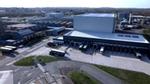
The new 10,000 m2 distribution centre, which connects directly to the factories on site, reduces the requirement for lorries to move goods between the factories and distribution centres in other locations. It is expected to deliver a significant estimated 27% reduction in primary logistics saving an associated 827 tonnes of CO₂ emissions.
This summer, Unilever is extending its use of electric freight, launching new EV HGV routes from its Cannock distribution centre in the Midlands, where two charging points have been installed.
All outbound movements from Unilever’s Burton factory, which makes Marmite, Hellmann’s and Colman’s among other brands, to Cannock are to be run via EV HGV. This is projected to deliver a CO2 saving of 90 tonnes. Additionally, EV HGV routes will begin from Cannock to some of Unilever’s major retailer customer depots, which is expected to save an extra 90 tonnes of CO2.
Lorraine continues; “In total this year we’ve made changes which we anticipate can deliver a saving of over 1,000 tonnes of CO2. These changes require investment and take time to test and implement, so I’m proud that as a team we are learning new skills and building stronger partnerships with our suppliers and customers to bring them to life.
“By embedding sustainability into how we operate and partner, we are working to build a more resilient business and contribute to a lower-carbon future.”